
Weeks 1–2
Pain
Calm it down without losing your conditioning.
Hands-on techniques take the edge off pain and swelling while we keep the rest of you moving, starting your very first visit.
What We Treat
The tweak you played through because the team needed you. The strain that never quite finished healing between seasons. It’s fixable, and it starts with a cause-first evaluation, not a guess.
Sound Familiar?
Two or more? You’re not just sore. Keep reading.
Why It Happens
An injury on the field rarely comes out of nowhere. It’s usually some mix of a few things: training load that climbed faster than your tissue could adapt. Strength or flexibility imbalances between one side and the other. Fatigue that quietly changes your mechanics late in a game. And a previous injury that healed enough to play through, but never got fully rebuilt.
None of that shows up from just watching you jog it off on the sideline. It takes a real, cause-first evaluation, sport-specific movement testing, not a generic checklist, to find what’s actually driving it. That’s why rest alone so often isn’t enough: it treats the symptom, not the source. You’re the one who plays hurt so the team doesn’t have to adjust without you. That toughness got you this far, but book a real evaluation before it costs you more time on the sideline.
The Honest Truth
Nobody regrets starting too early. Every week, someone in our clinic says they regret waiting.
How We Fix It
Every plan has an endpoint. Here’s what the four phases look like for a sports injury.
Weeks 1–2
Pain
Hands-on techniques take the edge off pain and swelling while we keep the rest of you moving, starting your very first visit.
Weeks 2–6
Prime
Targeted mobility and movement retraining rebuild the mechanics that broke down around the injury.
Weeks 6–10
Perform
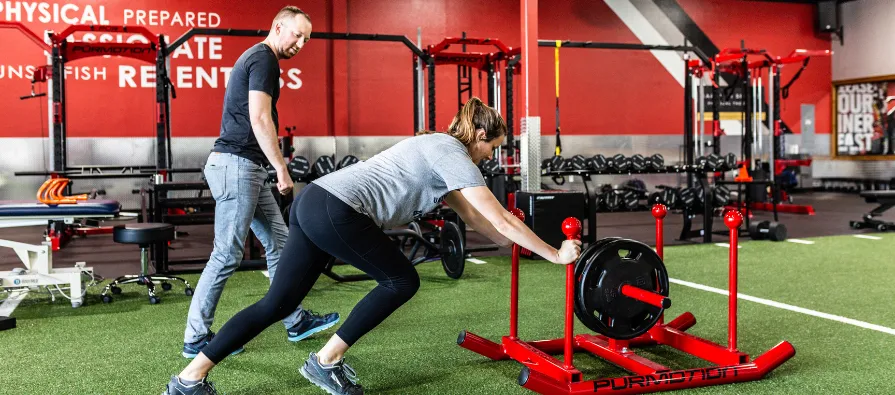
Progressive, sport-specific strengthening builds the power and control your body needs at full speed, not just at rest.
Weeks 10+
Prevent
Cutting, sprinting, and landing mechanics get tested under real load before you’re cleared to go all-in: that’s the endpoint, not just another appointment.
My daughter had a hamstring injury and we were referred to Brett. He’s amazing. Very knowledgeable. Thank you!
Jennifer L. · Youth hamstring injury
Week 1: couldn’t sprint without pulling up
Week 6: cleared for full practice
Questions, Answered
Usually not right away. Most sports injuries, sprains, strains, and overuse issues, can be evaluated and treated without imaging first. We start with a hands-on, cause-first evaluation and movement testing to find exactly what’s injured and why, and if imaging ever becomes genuinely necessary, we’ll help you get it. You don’t have to wait on a scan to start your comeback.
Often yes, just not the same way you were training before. Total rest tends to deload tissue that still needs to stay strong, which can slow you down more than it helps. A Doctor of PT figures out what you can safely keep doing and what needs to change, then progresses your training as the injury calms down.
Most athletes feel meaningful change within 4–6 visits. A full return-to-play plan runs through all four phases, Pain, Prime, Perform, and Prevent, typically over 6–10 weeks depending on the injury. Either way, you get a plan with an endpoint: you’ll always know which phase you’re in and what’s left before you’re cleared, not an open-ended string of appointments.
Book Your Visit
Request a time and a real person calls you back, usually within two business hours. No phone tree. No ‘someone will reach out.’ Just a plan.
5.0 · 195+ Google reviews
Typical response: under 2 business hours
Step 1 of 5
That’s the hard part done. We’ll call during business hours to lock in your time. Most people are on the schedule same week.
Visit Us