
Weeks 1–2
Pain
Calm the flare down.
Hands-on techniques ease swelling and take the edge off your most irritated joints, starting your very first visit.
What We Treat
The twenty minutes it takes your joints to loosen up every morning. The flare that shows up right when you had plans. It’s manageable, and it starts with a cause-first evaluation, not a guess.
Sound Familiar?
Two or more? Keep reading.
Why It Happens
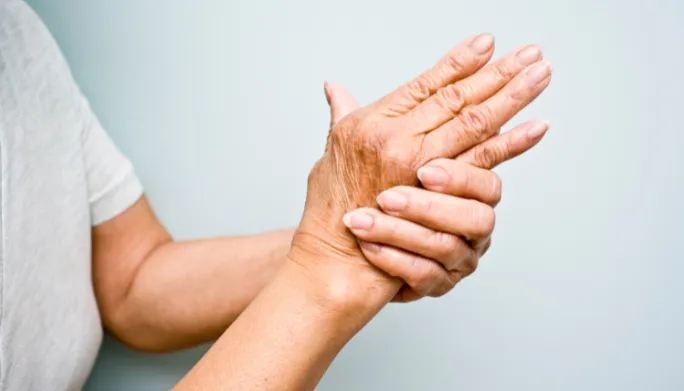
Arthritis isn’t just one thing happening in your joints. Cartilage wears thin and lets bones rub closer together. Muscles around the joint weaken the less you move them. Inflammation flares after too much activity, or too little. And the stiffer a joint gets, the less you use it, which makes it stiffer still.
We can’t reverse the wear. But we can find exactly which joints need mobility, which need strength, and how to keep flares further apart. That takes a real, cause-first evaluation, not a generic handout of stretches. Movement, dosed right, is one of the most effective tools you have, not something to avoid.
The Honest Truth
Nobody regrets starting too early. Every week, someone in our clinic says they regret waiting.
How We Fix It
Every plan has an endpoint. Here’s what the four phases look like for arthritis.
Weeks 1–2
Pain
Hands-on techniques ease swelling and take the edge off your most irritated joints, starting your very first visit.
Weeks 2–6
Prime
Targeted mobility work loosens the joints that have stiffened from moving less.
Weeks 6–10
Perform
Progressive strengthening around each affected joint takes pressure off the worn surfaces.
Weeks 10+
Prevent
A maintenance plan built around your specific joints keeps you moving well long after visit one: that’s the endpoint, not just another appointment.
Brett is not only focused on addressing your initial problem but with your overall health!
Shared by siana s. · Arthritis
Week 1: twenty minutes of stiffness before getting out of bed
Week 8: up and moving in under five
Questions, Answered
Not usually. An X-ray can confirm joint wear you likely already know about, but it won’t show which muscles have weakened or which movements are making your day harder. We start with a hands-on evaluation to find what’s actually driving your symptoms, and if imaging ever becomes genuinely necessary, we’ll help you get it. You don’t have to wait on a scan to start feeling better.
Yes, movement is one of the best tools you have. Hurt doesn’t always mean harm, total rest tends to make a joint stiffer and weaker, which sets up the next flare-up. The key is dosing the right movement for your specific joints, which is exactly what a Doctor of PT sorts out at your evaluation, then progresses safely as you improve.
We won’t reverse the wear in the joint, and we’ll always be honest about that. What we can do is build a plan with an endpoint: most patients feel meaningful change within 4–6 visits, and a full plan runs through all four phases, Pain, Prime, Perform, and Prevent, typically over 8–10 weeks. After that, many patients keep a light maintenance routine, entirely by choice, to keep flares further apart.
Book Your Visit
Request a time and a real person calls you back, usually within two business hours. No phone tree. No ‘someone will reach out.’ Just a plan.
5.0 · 195+ Google reviews
Typical response: under 2 business hours
Step 1 of 5
That’s the hard part done. We’ll call during business hours to lock in your time. Most people are on the schedule same week.
Visit Us