
Weeks 1–2
Pain
Calm the swelling and wake the quad back up.
Hands-on techniques and gentle activation work manage post-surgical swelling and get your quad muscle firing again from your very first visit.
What We Treat
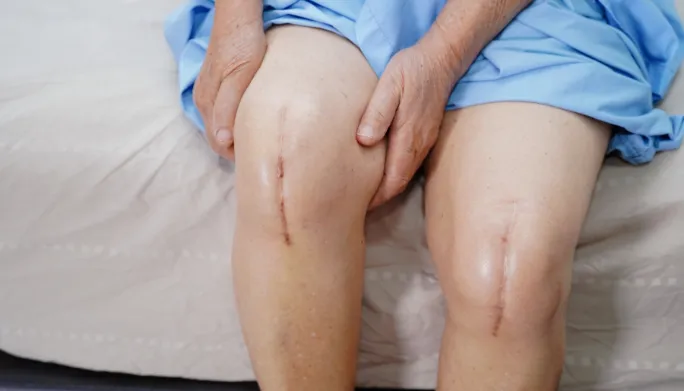
The new knee is in. Bending it, trusting it, and walking on it without thinking about it is the part still ahead. It’s fixable, and it starts with a cause-first evaluation, not a generic handout of exercises.
Sound Familiar?
Two or more? Keep reading.
Why It Happens
A new knee doesn’t come with new muscle memory. Most recoveries that stall come down to some mix of a few things: quad muscles that shut off around the surgery and haven’t switched back on. Scar tissue and swelling limiting how far the joint bends and straightens. A walking pattern that’s still favoring the knee out of habit. And a knee that simply hasn’t been asked to do enough yet to build the strength it needs.
None of that resolves with rest and a folder of handout exercises. It takes a real, cause-first evaluation, one that measures your actual range, strength, and walking mechanics, to know exactly where your recovery is stuck and how to move it forward.
The Honest Truth
Nobody regrets starting too early. Every week, someone in our clinic says they regret waiting.
How We Fix It
Every plan has an endpoint. Here’s what the four phases look like after knee replacement.
Weeks 1–2
Pain
Hands-on techniques and gentle activation work manage post-surgical swelling and get your quad muscle firing again from your very first visit.
Weeks 2–6
Prime
Targeted mobility work restores the range you need to sit in a car, climb stairs, and stand up without pushing off with your arms.
Weeks 6–10
Perform
Progressive quad and hip strengthening retrains your walking pattern so your new knee carries its share of the load.
Weeks 10+
Prevent
Kneeling, stairs, and longer walks get tested under real conditions before you’re cleared to go all-in: that’s the endpoint, not just another appointment.
Dr. Gardner provided a thorough assessment and plan for my knee issues. He is so knowledgeable with the latest research to back up the treatment plan and looks at the whole picture. Dr. Gardner is responsive in between sessions if issues arise.
Elaine M. · Knee care
Week 2: couldn’t bend the knee enough to sit in the back seat
Week 14: back in the garden, kneeling without a second thought
Questions, Answered
Usually within the first couple weeks, as soon as your surgeon clears you. Knees especially benefit from starting early, before scar tissue has a chance to limit your bend and extension. We start with a cause-first evaluation to see exactly where your range, strength, and walking pattern stand, then build from there. You don’t need to wait until you’re “further along” to get help.
Some discomfort while regaining bend and extension is normal, sharp or lingering pain is not. A Doctor of Physical Therapy works with you one-on-one, every visit, and doses each exercise to your healing joint, not a generic script. You’ll know the difference between productive discomfort and a red flag, and we’ll always tell you which one you’re feeling.
Most patients see meaningful gains in bend and strength within 4–6 visits. A full recovery plan runs through all four phases, Pain, Prime, Perform, and Prevent, typically over 10–14 weeks, depending on your starting point and your goals. Either way, you get a plan with an endpoint: you’ll always know which phase you’re in and what’s left, not an open-ended string of appointments.
Book Your Visit
Request a time and a real person calls you back, usually within two business hours. No phone tree. No ‘someone will reach out.’ Just a plan.
5.0 · 195+ Google reviews
Typical response: under 2 business hours
Step 1 of 5
That’s the hard part done. We’ll call during business hours to lock in your time. Most people are on the schedule same week.
Visit Us